
The SONATA project is dedicated to creating adaptive workspace solutions that will improve health and wellbeing for the workers that use these spaces. The SONATA adaptive technologies, including kinetic acoustic ceiling panels, height adjustable desks, and mobile robotic wall partitions, are by their nature moveable, which allows for dynamic adaptability within the office space, accommodating the changing needs and preferences of workers.
So, how will these various technologies be integrated in practice? Our colleagues from UNS have been developing a modular grid system, the foundational element of SONATA’s technological solution implementation.
This modular grid system will host the SONATA adaptive technologies, allowing reconfiguration for the growth or reduction in office space requirements, while supporting diverse activities, promoting collaboration and accommodating individual working styles, in addition to offering further implementational benefits.
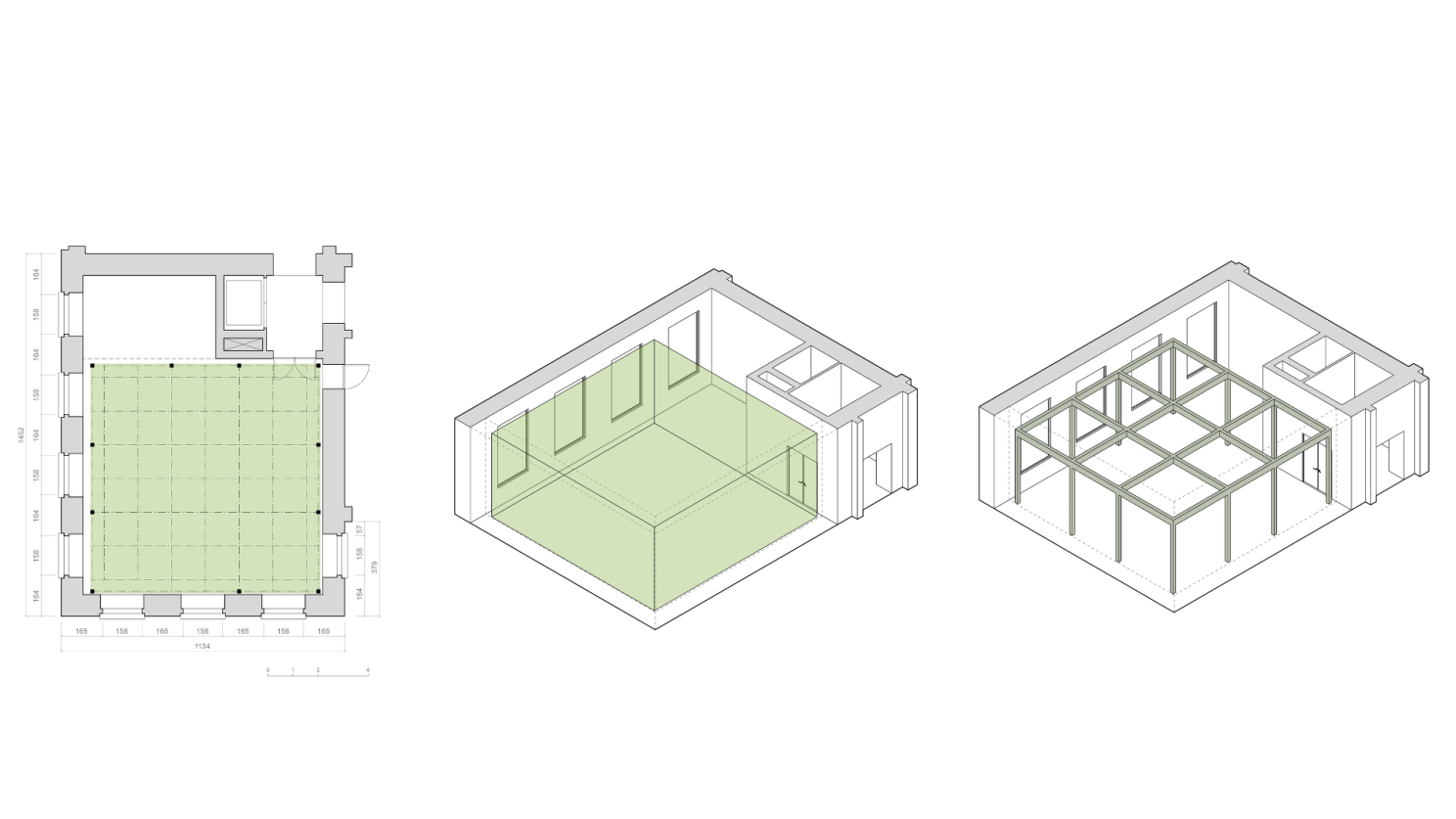
The Benefits of Modularity in SONATA
Modularity in adaptive architecture enables the creation of systems with interchangeable components that offer flexibility and scalability. In the SONATA project, modularity is crucial for integrating adaptive technologies, such as mobile partitions and kinetic ceilings, which enhance workspace functionality. SONATA is ambitious in its aims to offer adaptability at the macro, micro, and nano level. At the macro level office layouts should be optimised at the beginning of the day to accommodate various activities and spatial requirements, at the micro level ongoing adjustments should be supported throughout the day, allowing the environment to respond to specific user needs and changes in real-time, while at the nano level minute adjustments must be allowed for that cater to individual preferences and immediate environmental changes, ensuring a highly responsive workspace.
Modularity has been identified as a fundamental basis for the SONATA workspace as it offers specific benefits towards these adaptability requirements, while facilitating the widespread adoptability of SONATA’s solutions:
• Adaptability and Scalability: These are essential for ensuring the usability of SONATA’s modular system across various sites, accommodating different spatial configurations and site needs, supporting the reconfiguration of office layouts for diverse functions.
• Cost-Effectiveness: Through the strategic use of prefabricated modular components, construction time and costs are reduced.
• Sustainability: Modularity facilitates easy updates and integration of new technologies, preventing obsolescence and reducing renovation needs, ensuring long-term adaptability. While all systems can incorporate sustainable materials and technologies, modular systems are particularly effective in doing so because they facilitate easy updates and replacements.
• Customization and Personalization: The modular system allows spaces to be tailored and adjusted to user needs without altering the core structure, and supports flexible arrangements, enabling environments to adapt to diverse work styles and activities. With their input, this customization aims to enhance user satisfaction and productivity.
• Rapid Deployment and Adaptation: The modular system provides a stable framework that facilitates the quick integration of technologies like mobile partitions and kinetic ceilings, enabling work environments to adapt to changing needs without altering the core structure.
• Integration with Technology: The integration of advanced adaptive technologies is supported, facilitating their orchestration to create situational-aware environments that intelligently monitor and respond to user needs, enabling timely adjustments and interactions within the office space.
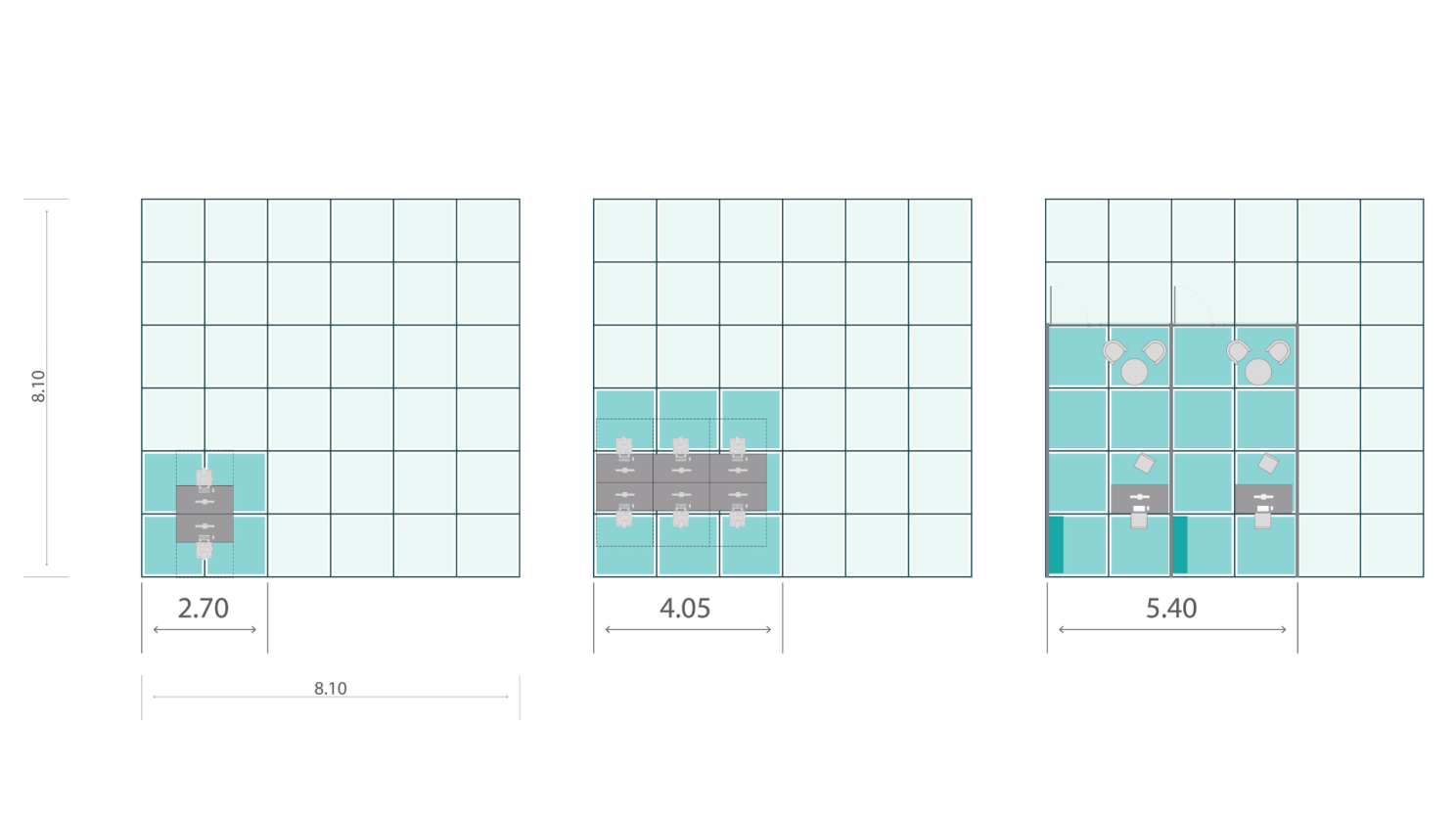
The SONATA Grid System
Central to SONATA’s modular structure is the development of a grid system. A unified grid system is ideal for SONATA’s purposes as it ensures precise alignment and integration of components, facilitates seamless deployment and operation of adaptive technologies, provides a metric sizing association among the key orchestration components and gives a framework to organize and coordinate different technologies such as sensors, smart systems, and adaptive furnishings. In addition, as SONATA aims to develop workspace solutions suitable for diverse sites, from traditional offices to home workspaces, the grid system can ensure that SONATA’s solutions are applicable across various contexts. Therefore, the establishment of a standardized grid system will allow SONATA’s adaptive solutions to be effective and universally applicable, enhancing occupant wellbeing and productivity across a wide variety of office contexts.
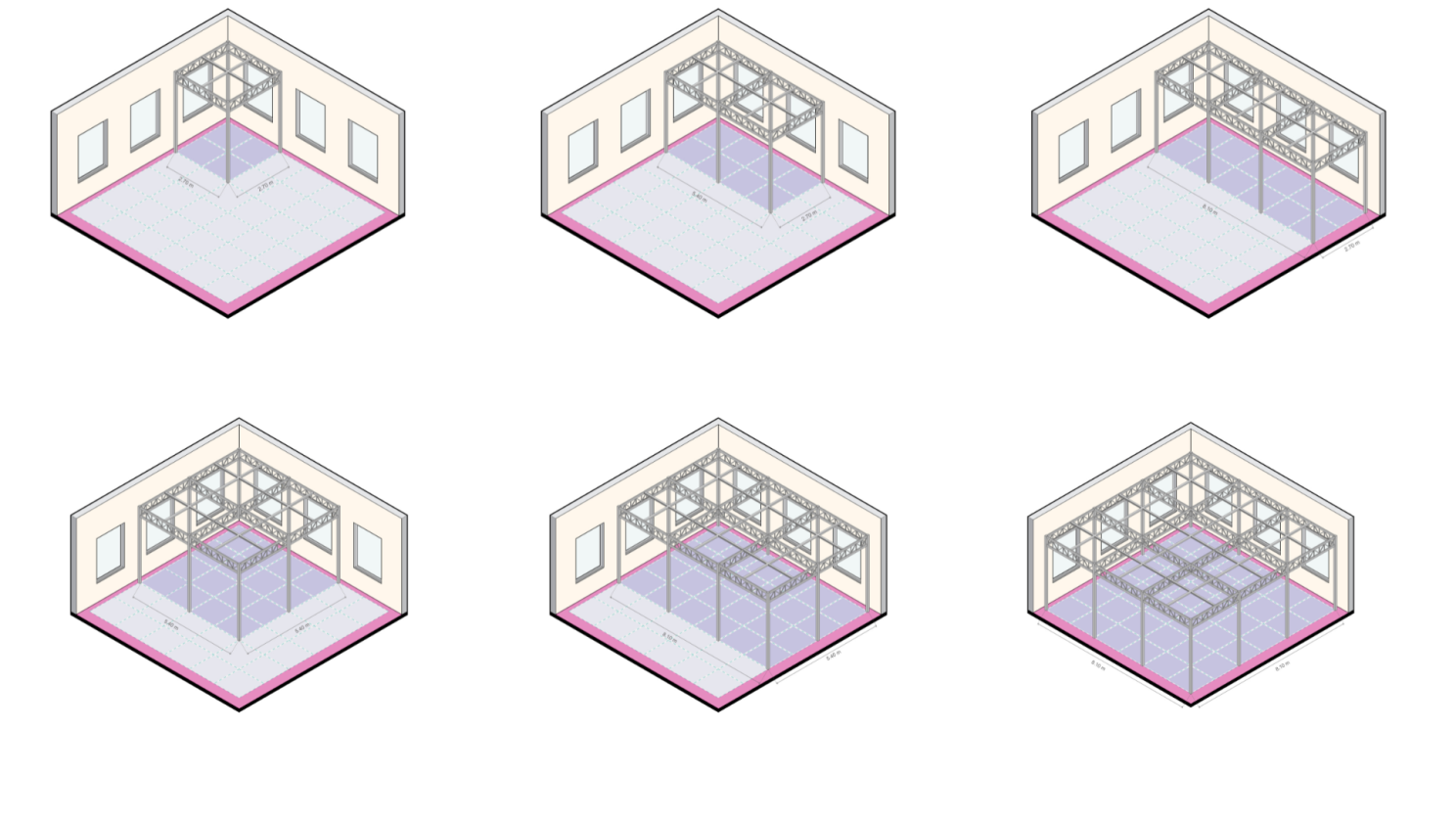
In designing the SONATA grid system, the following considerations are being taken into account:
• Structural Grid Assessment: Grid typologies will be compared, evaluating their strengths and weaknesses to determine the most effective option for SONATA’s needs.
• Regulation Assessment: The selection of the minimum cell size will be based on relevant regulations and standards, ensuring compliance and functionality across Europe and beyond.
• Setting the Vertical Spacing: The vertical dimensions necessary to accommodate the adaptive layers and ensure optimal environmental conditions will be defined.
• Primary Metric Association to Grid Fractions and Dimensions: How the grid’s fractions and dimensions relate to the primary metrics of the workspace, facilitating efficient design and adaptation.
By considering these aspects, this standardized grid system will succeed in being functional across a diverse range of workspace environments, ensuring that SONATA’s adaptive workspace technologies can be widely implemented.
Future proofing is also a key consideration, with the system design foreseeing compliance requirements with potential future regulatory changes and evolving workplace standards, while accommodating potential changes in technological requirements and varying occupancy densities. The applicability and impact of the SONATA modular grid system will therefore be guaranteed across workspaces, over the short and long term.